

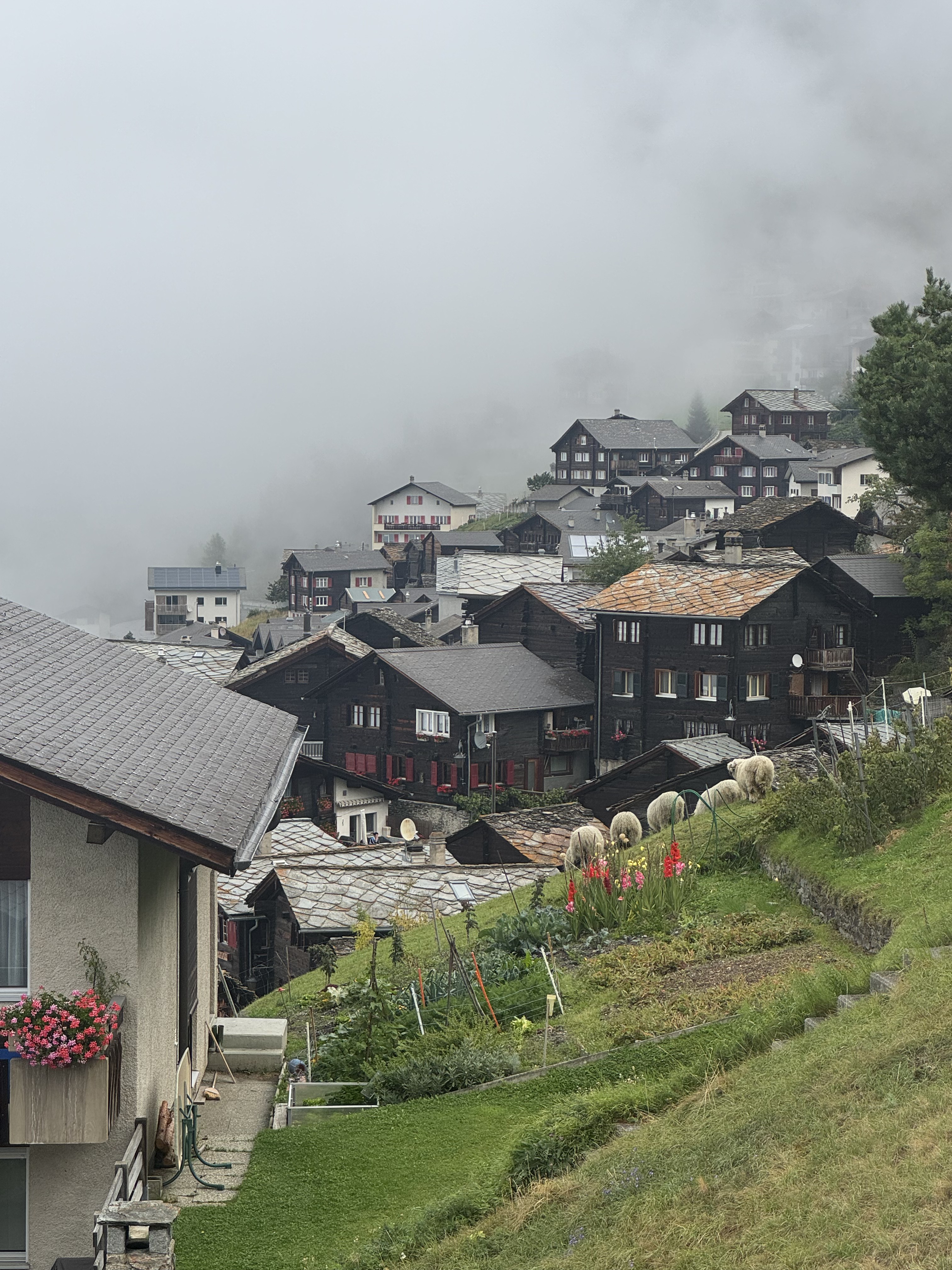
Exploring the cultural significance and history of the Walliser Schwarznasenschaf
The breed's documented history stretches back to the 15th century, though shepherds in the region believe these sheep roamed the Alps long before written records began. The Upper Valais, particularly the areas around Visp and the Matter Valley leading to Zermatt, served as the cradle of the breed's development.
Isolated by formidable mountain terrain, local farmers selectively bred sheep adapted to extreme conditions: animals that could navigate rocky outcrops, withstand harsh winters, and thrive on sparse alpine vegetation.
The breed's striking appearance - a black face and ears set against a woolly white body, with black patches on knees and hocks - became standardized through generations of careful selection. The spiral horns present in both sexes and the characteristically shaggy, long-staple wool evolved as practical adaptations to the alpine environment before becoming beloved aesthetic traits.
Central to understanding the Valais Blacknose's cultural significance is the practice of transhumance, the seasonal movement of livestock between valley floors and high mountain pastures. This tradition, inscribed on UNESCO's Representative List of the Intangible Cultural Heritage of Humanity in 2019, shapes the annual rhythm of Valaisan communities.
Each summer, shepherds lead their flocks to alpine pastures above the tree line, where sheep graze on nutrient-rich grasses and wildflowers. The autumn descent - the desalpe or Alpabzug - transforms into a celebration of community and continuity. Sheep adorned with flowers and bells parade through villages while residents gather to welcome the returning flocks.
For centuries, the Valais Blacknose provided essential resources to mountain communities. Their wool, though too coarse for fine textiles, proved ideal for durable carpets, mattress filling, and insulation against alpine cold. Meat sustained families through long winters. Perhaps most importantly, sheep represented portable wealth in a region where arable land remained scarce.
The breed became woven into local identity. Ownership of Valais Blacknose sheep conferred social standing. Families maintained detailed breeding records passed down through generations, and certain bloodlines commanded premium prices. Village life organized itself around the needs of the flocks, with communal grazing rights, shared shepherding duties, and collective infrastructure for winter housing.
The mid-20th century brought profound challenges. As Switzerland industrialized and young people migrated to cities, traditional mountain farming declined precipitously. The Valais Blacknose population dwindled to dangerously low numbers by the 1960s. The breed faced extinction not from any failure of the sheep themselves, but from the broader collapse of the way of life that sustained them.
Revival came through the dedication of committed breeders and growing recognition of the breed's cultural value. In 1962, the Oberwalliser Schwarznasenschafzuchtverband - the breed association for the Upper Valais - formalized breeding standards and registration systems. Swiss agricultural policy began supporting heritage breeds as living cultural monuments deserving preservation alongside historic buildings and traditional crafts.
Today, the Valais Blacknose enjoys remarkable popularity that extends far beyond Switzerland's borders. The breed's photogenic appearance has made it a social media sensation, driving international demand that would have seemed unimaginable a generation ago. Breeders in North America, the United Kingdom, Australia, and elsewhere now maintain registered flocks, though Swiss breeders retain pride of place as guardians of the original bloodlines.
Within Switzerland, the breed has become an ambassador for Valaisan culture and alpine tourism. Visitors to Zermatt encounter Valais Blacknose imagery on everything from postcards to chocolate packaging. Hotels arrange encounters with local flocks. The sheep appear at cultural festivals, agricultural fairs, and promotional events representing Swiss mountain traditions.
What distinguishes the Valais Blacknose from a mere agricultural commodity is its role as a carrier of intangible heritage. The knowledge required to breed, raise, and shepherd these animals represents accumulated wisdom transmitted across generations. Understanding seasonal grazing patterns, reading weather in mountain environments, managing lambing in harsh conditions, selecting breeding pairs to strengthen the flock - these skills cannot be learned from books alone.
The breed also preserves genetic diversity increasingly recognized as valuable. Adapted over centuries to specific environmental conditions, the Valais Blacknose carries traits that may prove crucial as climate change transforms mountain agriculture. Their ability to thrive on marginal lands offers lessons for sustainable farming in challenging environments worldwide.
For the shepherds who still lead their flocks to summer pastures, for the breeders who maintain meticulous records of bloodlines, and for the communities that celebrate the alpine seasons through their sheep, the Valais Blacknose remains what it has always been: a partner in the ongoing human project of making a home in demanding but beautiful places.