

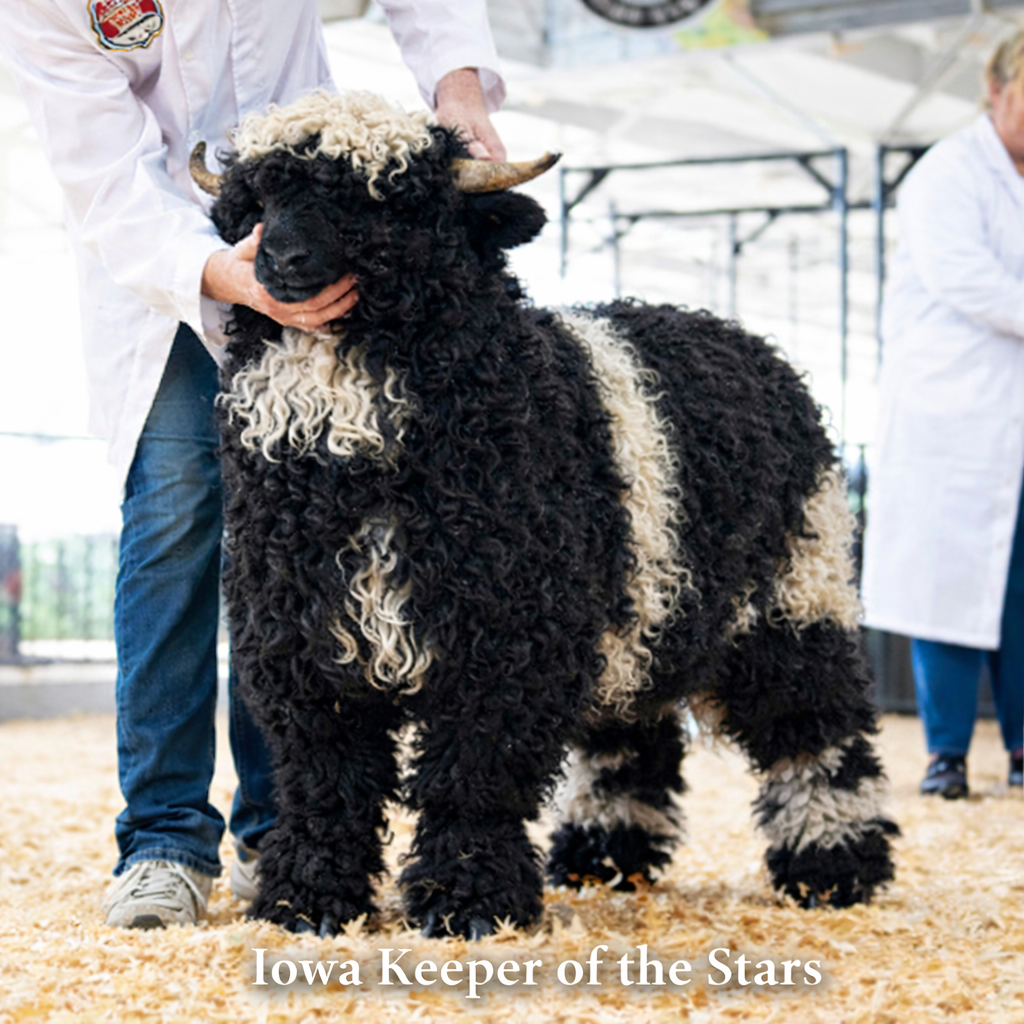
Photo: Iowa Keeper of the Stars | Credit: Valais Iowa
HeritageUnderstanding the rare black-coated Valais Blacknose and their special place in Swiss tradition
In Swiss shepherding tradition, a Spitti is not simply any dark sheep - it is specifically a purebred Valais Blacknose whose genetic expression results in a predominantly black coat rather than the breed's characteristic white fleece. This distinction matters because the term carries cultural weight that extends beyond mere coloration.
A true Spitti must be:
Dark-colored sheep from other breeds, crossbreeds, or even Valais Blacknose crosses cannot properly be called Spitti. The term is reserved exclusively for purebred Valais Blacknose sheep exhibiting this rare color variation. This precision reflects Swiss breeding standards that value authenticity and proper lineage documentation.
While Spitti sheep capture attention with their striking appearance, Swiss breeding protocols treat them differently than their white-fleeced counterparts. The black coloration, though beautiful, does not align with the official VBN breed standard which specifies a white body with black markings limited to the face, ears, knees, and hocks.
Spitti Rams: Traditional Swiss practice does not use Spitti rams for breeding. Because rams influence many offspring, using a Spitti ram would risk producing more black-coated lambs, moving the breeding program away from the established standard.
Spitti Ewes: Spitti ewes may be bred in Swiss flocks. Since a ewe produces fewer offspring than a ram's breeding impact, an occasional Spitti lamb from a Spitti ewe remains manageable within the overall breeding program. The ewe's genetics still carry the breed's valued conformational traits, even if her color expression differs from the standard.
This breeding approach reflects pragmatic Swiss shepherding - valuing the genetics and good fortune associated with Spitti while maintaining the breed standard's integrity through controlled breeding decisions.
For generations, Swiss shepherds have considered the appearance of a Spitti in their flock as a blessing. The tradition holds that a black sheep among the white brings good luck to the entire flock and its keeper. This belief transforms what might otherwise be seen as an off-standard animal into something treasured.
The Spitti's status as a lucky charm connects to broader Alpine folklore where unusual natural occurrences often carried spiritual significance. Just as a four-leaf clover stands out among ordinary clovers, a Spitti stands out among white Valais Blacknose - rare, unexpected, and therefore special.
Many Swiss shepherds who receive a Spitti lamb consider it a gift, keeping the animal even when it cannot be shown competitively or used for breeding rams. The cultural value transcends practical breeding considerations, reminding us that livestock relationships extend beyond mere production.
As Valais Blacknose sheep have gained international popularity, interest in Spitti has grown as well. Social media has amplified fascination with these striking black sheep, sometimes creating market dynamics at odds with traditional Swiss practice.
Responsible breeders honor the Spitti's cultural significance while maintaining breeding program integrity. This means:
The occasional Spitti lamb remains what it has always been in Swiss tradition - a happy surprise, a token of good fortune, and a reminder that even within breed standards, nature expresses wonderful variation.
For those fortunate enough to have a Spitti in their flock, these black sheep serve as ambassadors for the breed's rich heritage and the enduring connection between shepherds and their animals across generations of Alpine farming.