

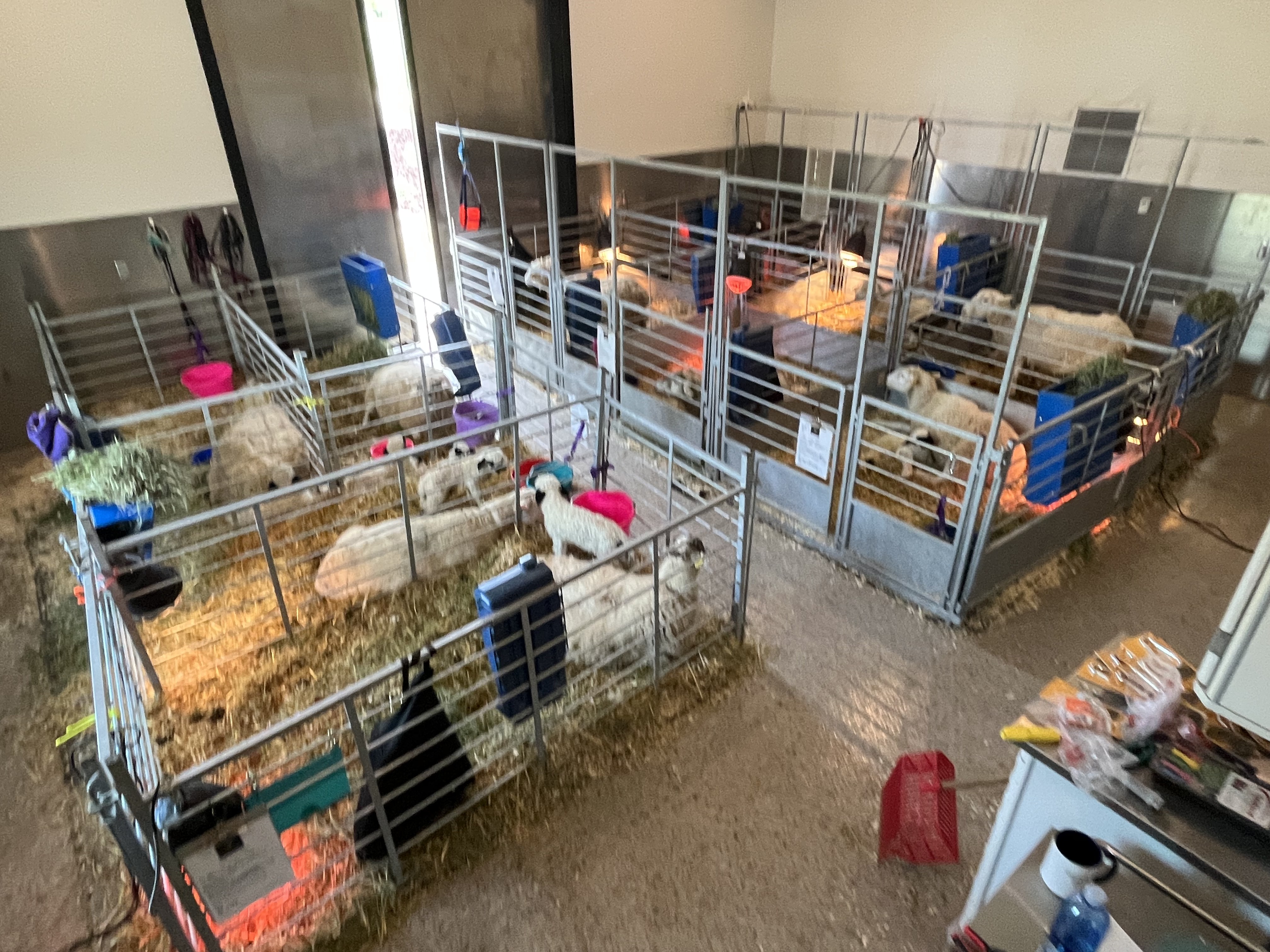
Creating secure bonding spaces for ewes and their newborn lambs
A lambing jug (also called a claiming pen, bonding pen, or lambing pen) is a small, temporary enclosure used to house a ewe and her newborn lamb(s) for the first few days after birth. These individual pens allow the mother and baby to bond without interference from other sheep in the flock.
The term "jug" comes from the practice of "jugging" - the act of moving a ewe and her lambs into one of these pens shortly after birth. This simple tool has been used by shepherds for generations and remains one of the most important pieces of equipment during lambing season.
Bonding: The first 24-48 hours are critical for establishing the bond between a ewe and her lambs. In a jug, without distractions or competition, the ewe learns her lambs' unique scent and voice, while the lambs imprint on their mother. This bond is essential for the lambs' survival once they rejoin the flock.
Colostrum Intake: Lambs must receive colostrum (the ewe's first milk) within the first few hours of life. Colostrum provides essential antibodies and energy. In a jug, you can easily monitor whether lambs are nursing successfully and intervene if needed.
Temperature Regulation: Newborn lambs, especially Valais Blacknose with their distinctive wool patterns, need a warm, draft-free environment. Jugs can be bedded deeply and positioned away from cold drafts.
Record Keeping: When each family unit is in its own jug, it's easy to tag lambs, record birth weights, note any complications, and track which ewe belongs to which lambs.
Health Monitoring: You can quickly spot problems - a lamb not nursing, a ewe with mastitis, or signs of illness - when families are separated in individual pens.
Size: Each jug should be approximately 4' x 4' to 5' x 5' - large enough for the ewe to lie down comfortably with her lambs, but small enough to keep them close together. For larger breeds or ewes with triplets, go slightly bigger.
Walls: Jug panels should be solid or nearly solid at lamb height (the bottom 18-24 inches) to prevent drafts and stop lambs from slipping under or through to neighboring pens. The upper portion can be open for ventilation and visibility.
Flooring: Bed jugs deeply with clean straw - at least 6-8 inches. This provides insulation, cushioning, and helps keep lambs dry. Replace or add bedding daily.
Water and Feed: Each jug needs a water bucket (hung high enough that lambs can't fall in) and a hay rack or small feeder. A nursing ewe needs plenty of fresh water and quality hay.
Heat Source (if needed): In cold climates or for weak lambs, have heat lamps available. Position them safely to avoid fire hazards and ensure lambs can move away if too warm.
Location: Set up jugs in a clean, dry, well-ventilated area of your barn. Avoid placing them in high-traffic areas where the ewe might feel stressed.
Step 1 - Prepare: Have your jugs ready before lambing season begins. Stock them with fresh bedding, water, and hay.
Step 2 - Wait for Delivery: Allow the ewe to deliver naturally in the main lambing area. Don't rush to move her - give her time to clean and bond with her lambs.
Step 3 - Move Carefully: Once the ewe has cleaned her lambs and they've attempted to stand/nurse (usually 30-60 minutes after birth), gently move the family to a jug. Carry the lambs low to the ground where the ewe can see and smell them - she'll follow.
Step 4 - Initial Check: In the jug, perform basic health checks: ensure lambs are breathing well, check for any birth defects, dip navels in iodine, and confirm the ewe has milk in both teats.
Step 5 - Monitor: Check on jugged families frequently (every few hours initially). Watch for nursing, make sure lambs are warm and active, and ensure the ewe is accepting all her lambs.
Most families can leave the jug after 24-72 hours, depending on several factors:
When releasing, move families to a small "mixing pen" with just a few other ewe-lamb pairs before introducing them to the larger flock. This gradual transition helps maintain bonds.
Triplets: When a ewe has triplets, you may need to decide whether she can raise all three. Some ewes can, especially with good nutrition. Others may need help. The jug gives you time to assess the situation and bottle-feed the weakest lamb if necessary.
Rejected Lambs: Occasionally, a ewe won't accept one of her lambs. The jug's close quarters can help encourage bonding. In stubborn cases, you may need to restrain the ewe for nursing sessions or consider grafting the lamb onto another ewe.
Grafting: If you need to graft a lamb onto a foster mother (for example, if its own mother died), the jug is essential. The close confinement helps the ewe accept the new lamb, especially when combined with traditional grafting techniques.
Weak Lambs: Lambs that are slow to start benefit from extra time in the jug where you can monitor them closely and tube-feed if necessary. Warmth and supervision are key.