Swiss grading is the official point-based evaluation system used to assess Valais Blacknose sheep against the original Swiss breed standard. It measures how closely an individual animal conforms to that standard at its specific stage of development.
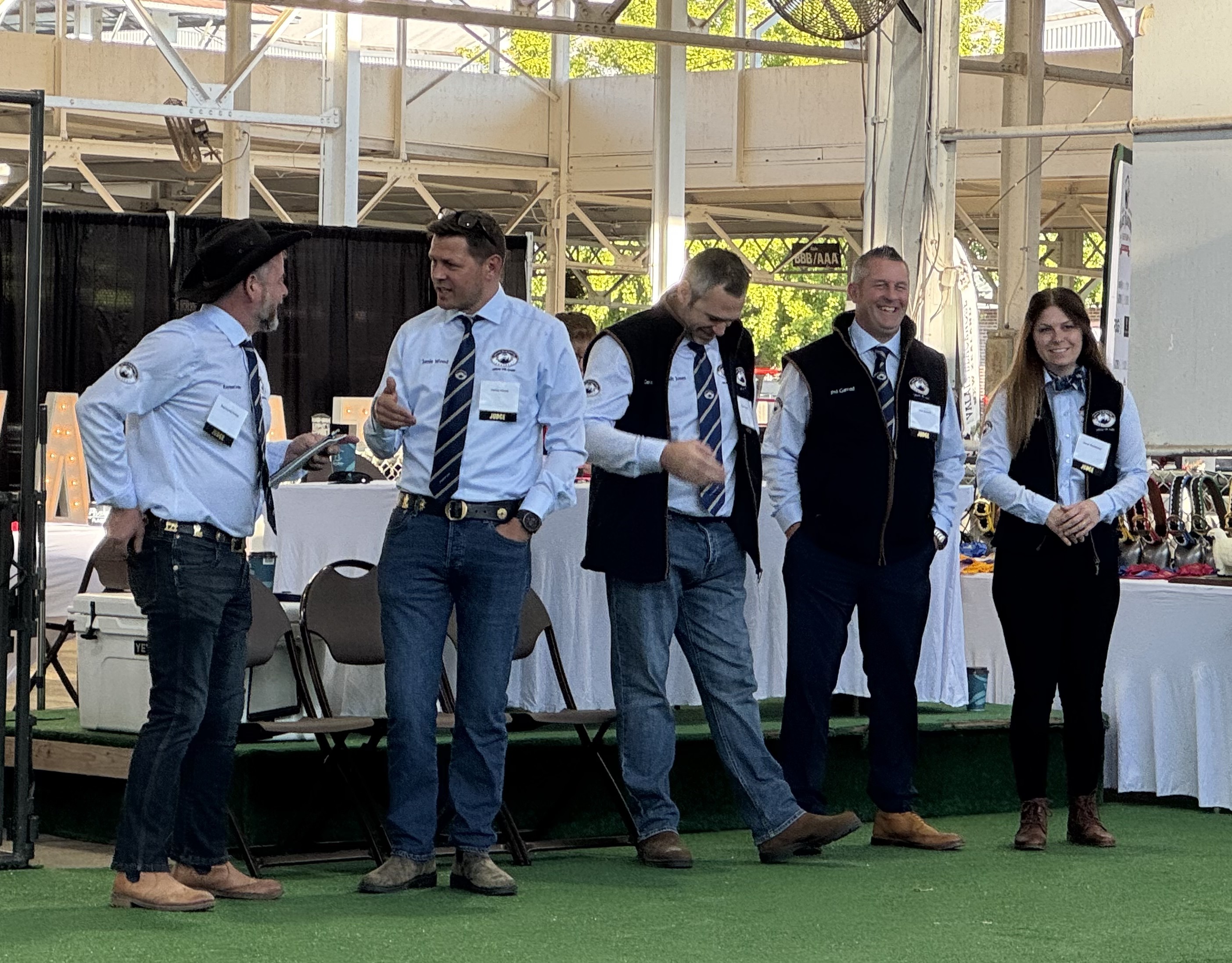
Each sheep receives three numerical scores, one in each category: Appearance, Conformation, and Wool. Certified graders evaluate each category independently using the Swiss standard.
Yes. Swiss grading is age-adjusted, meaning the maximum possible score increases as the animal matures:
| Age Range | Maximum Score |
|---|---|
| 4-12 months | 4 / 4 / 4 |
| 12-24 months | 5 / 5 / 5 |
| 24-36 months | 6 / 6 / 6 |
Graders begin at the maximum score for the animal's age class and deduct points for deviations from the Swiss breed standard. Each point represents a meaningful difference in structure, wool, or breed character.
A minus one animal is just one point below the maximum possible total for its age class. These animals are considered elite quality because Swiss grading is intentionally strict and conservative.
They are exceptionally rare. The U.S. Valais Blacknose population is still developing compared to Switzerland, where the breed has been refined over generations. Both minus one and true maximum-point animals represent significant milestones in American breeding programs.
No. Swiss grading is not inflated. Many strong, productive, and valuable animals score slightly below the maximum while still contributing positively to breeding programs. Small numerical differences matter in this system and should be interpreted within the context of breed development in the United States.