

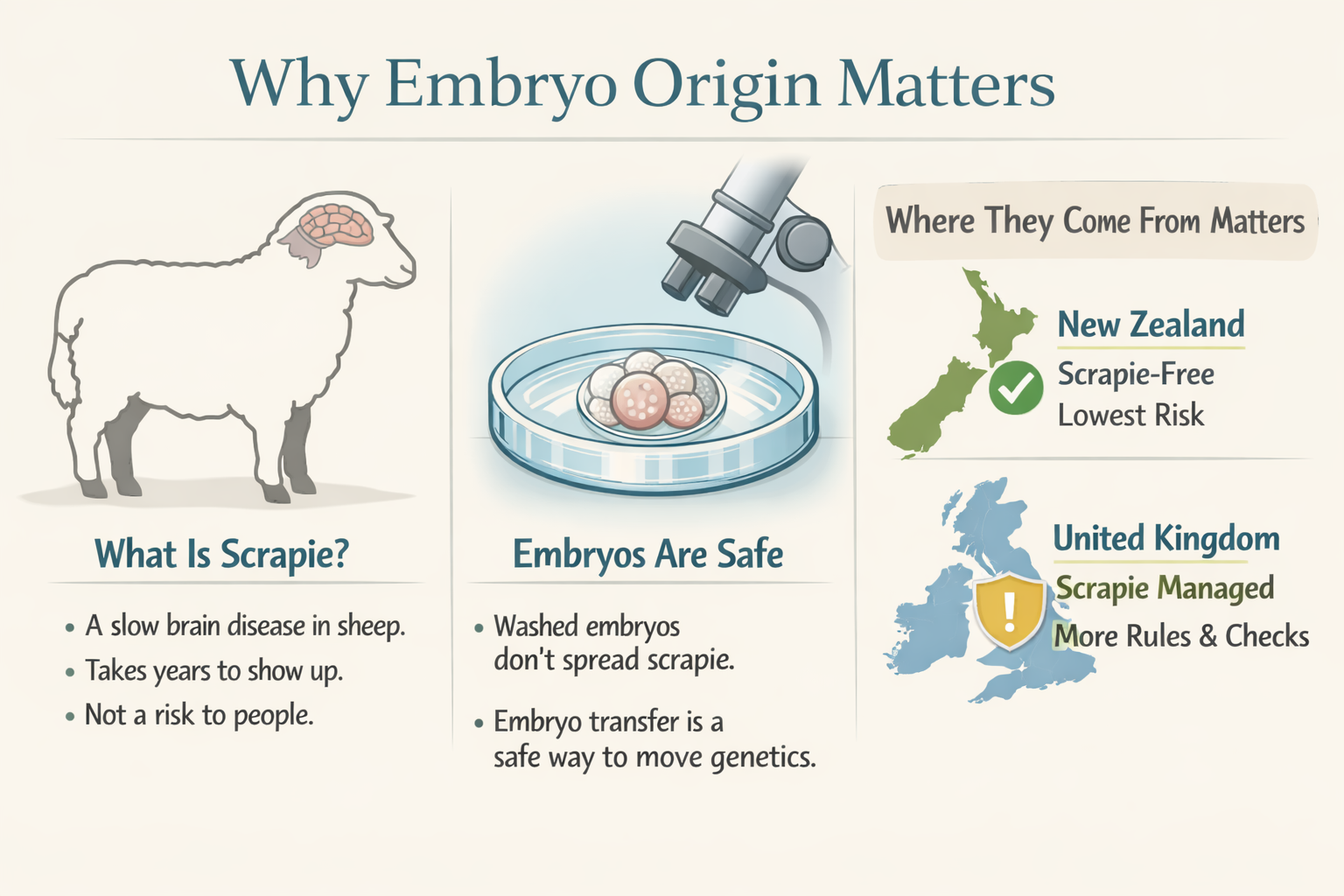
Scrapie is one of those livestock terms that sounds alarming, is often misunderstood, and becomes especially important when international genetics are involved. If you are considering imported embryos, understanding scrapie and how different countries manage it helps explain why embryos from some regions are easier to import and carry less regulatory complexity than others.
Scrapie is a fatal, degenerative neurological disease that affects sheep and goats. It belongs to a group of diseases called transmissible spongiform encephalopathies, or TSEs. These diseases are caused by prions, which are abnormal proteins that damage brain tissue over time.
Scrapie has a very long incubation period. Animals can appear completely healthy for years before showing signs, which may include itching, weight loss, changes in behavior, and coordination problems. Once clinical signs appear, the disease is always fatal.
Importantly, scrapie is not known to infect humans, but it has major implications for animal health, breeding programs, and international trade.
Scrapie is primarily transmitted through:
Embryo transfer is considered one of the safest ways to move genetics internationally. Properly collected and washed embryos do not transmit scrapie. However, regulators also evaluate the scrapie status of the donor flock and the exporting country.
New Zealand is internationally recognized as scrapie-free, with no recorded cases of classical scrapie. This status results in fewer regulatory hurdles and the lowest scrapie risk category for imported embryos.
The United Kingdom has a long history of sheep production and scrapie management. While robust surveillance and breeding programs exist, historical presence of scrapie adds regulatory complexity to embryo imports.
The Bottom Line: While embryo transfer itself is safe, the disease history of the exporting country matters. New Zealand offers the lowest risk profile, while the UK requires additional oversight. Understanding these distinctions allows breeders to make informed, strategic decisions.